

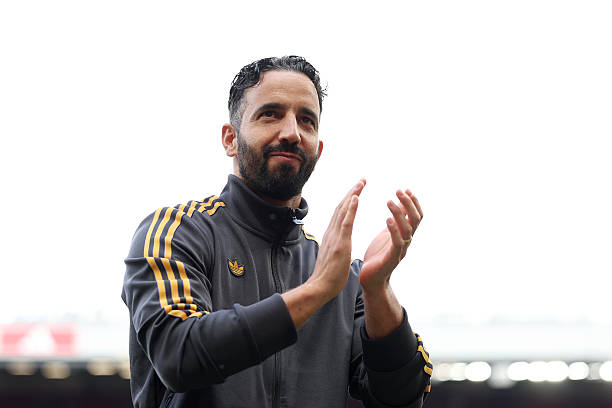
Kolkata – Manchester United has announced the departure of head coach Ruben Amorim, ending his time at Old Trafford prematurely after a string of disappointing Premier League performances. The club’s official statement, issued on January 4th, explained that the move was made to give the team “the best possible chance of achieving its objectives for the remainder of the season.” An interim coaching staff has been appointed in advance of United’s next league game.
Recent results increased pressure
Manchester United’s form in recent weeks placed Amorim under growing scrutiny. The team managed just one win in their last three matches, with draws against Leeds United and Wolverhampton Wanderers highlighting persistent issues in game management and attacking efficiency.
Against Wolves, United surrendered a second-half lead at Old Trafford, dropping points against a side struggling near the bottom of the table. That result followed a similar pattern seen earlier against Leeds, where United controlled possession but failed to convert dominance into a winning margin.
Although a narrow victory over Newcastle United briefly steadied the situation, performances continued to raise concerns within the club hierarchy.
Tactical concerns and inconsistency
Amorim’s tactical approach, which relied heavily on structured systems and frequent formation changes, struggled to produce consistency. United often appeared rigid in buildup and vulnerable during transitions, particularly when protecting leads.
Sources close to the club suggest there was frustration over the lack of attacking fluidity and the team’s inability to respond effectively during matches. Defensive lapses and dropped points from winning positions became recurring themes during his spell.
Behind-the-scenes factors
Beyond on-field results, Amorim’s exit is understood to have been influenced by internal disagreements regarding squad planning and recruitment strategy. The Portuguese coach had previously expressed a desire for greater involvement in long-term decision-making, while the club remained cautious amid mixed performances.
With United currently outside the Premier League title conversation and facing pressure to secure a strong finish, the board opted for a managerial change rather than allowing uncertainty to continue.
What comes next
The interim coach, Darren Fletcher, is expected to focus on short-term stability, with an emphasis on defensive organisation and a simplified tactical approach. A return to a traditional back four and clearer positional roles could be implemented as United looks to regain momentum in the league.
Manchester United have not yet announced whether a permanent replacement will be appointed before the end of the season. Ruben Amorim’s departure marks another transitional moment for Manchester United, a club still searching for long-term stability in the post-Sir Alex Ferguson era. While his tenure showed moments of promise, inconsistent results and tactical concerns ultimately led to his dismissal.
Attention now turns to whether Manchester United can steady their campaign and finish the season strongly under interim leadership.