
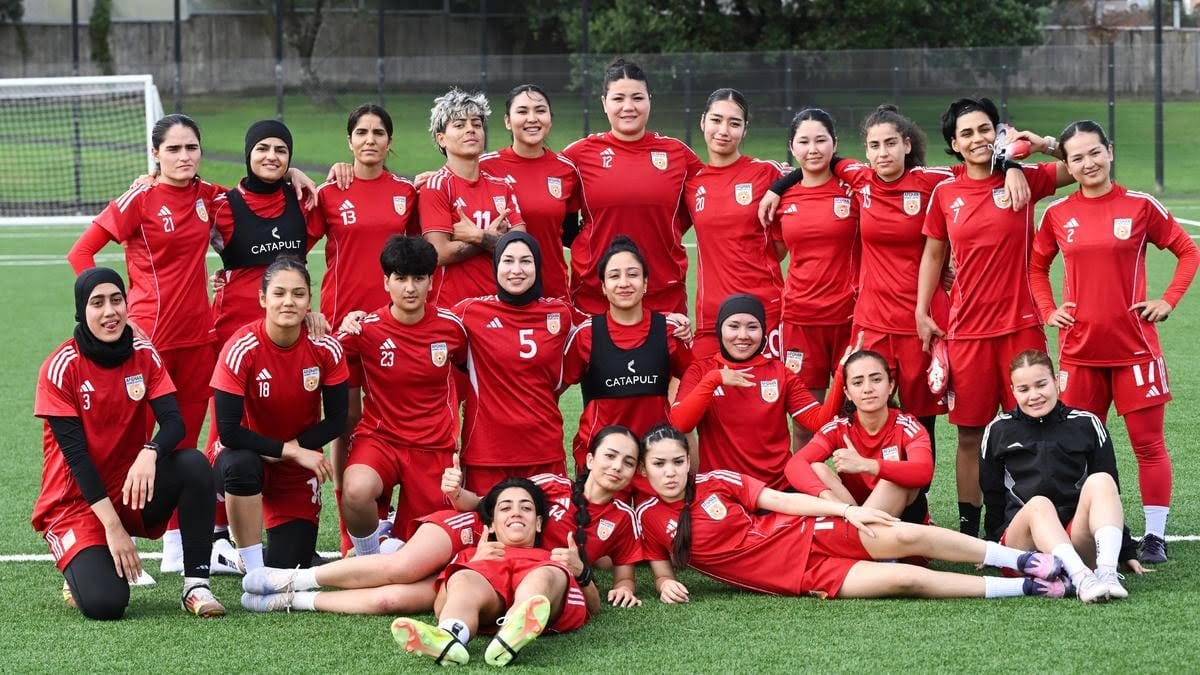
Kolkata: On 4 June 2026, the newly recognised Afghanistan women’s team played their first official match in nearly five years. The team is now eligible to compete in future international competitions, including qualification for the 2028 Olympic Games.
But this journey back to the international stage cost far more than anyone could imagine.
The Afghanistan women’s national football team trained on a tennis court. Within fifteen years, it would no longer be allowed to exist. Founded in 2007, the team was built from schoolgirls selected from across Kabul. Before getting proper training facilities, they practised on a tennis court and earned the nickname “The Lionesses of Afghanistan.” In 2010, they played their first FIFA-sanctioned match against Nepal. They lost, but the result hardly mattered. Simply stepping onto the pitch meant far more than the final score.
Eleven years later, on 15 August 2021, everything changed when the Taliban seized control of Afghanistan, putting the players’ lives at risk. The Afghanistan Football Federation reached out to captain Farkhunda Muhtaj in Toronto after issuing a global plea. She connected with American evacuation organisers already working on rescue efforts. Khalida Popal, one of the founders of the team, helped coordinate the rescue and urged players to burn their jerseys and delete everything from their social media to protect themselves from the Taliban. By late August, the players, their family members and team staff had been evacuated from Afghanistan to Australia.
Later in September 2021, dozens more players and their families fled to Pakistan, many disguised in burqas. By November, around 130 evacuees had reached the United Kingdom, although the BBC later reported that some had allegedly exaggerated their football backgrounds to obtain visas. The players eventually settled across Australia, the UK, Portugal and the United States, with Australia becoming the team’s main base. In 2022, they began playing in Australia under the name Melbourne Victory FC AWT. However, the team remained unrecognised by the Taliban-controlled Afghanistan Football Federation.
In May 2025, FIFA approved a one-year pilot refugee team named Afghan Women United. Representing Afghanistan in exile and coached by Pauline Hamill, the team played its first matches in Morocco in October 2025. The real turning point came on 29 April 2026, when the FIFA Council changed its regulations to allow FIFA to register a national team directly if a country’s federation refuses or is unable to do so. Human Rights Watch, Amnesty International and Nadia Nadim welcomed the decision, calling it recognition of the players as “elite athletes with the right to compete, be seen and be respected.”
Today, Afghanistan’s women footballers have reclaimed something many believed they had lost forever: the right to represent their country. Their story is no longer just about football; it is about courage, resilience and refusing to be erased. The world is watching again, and this time, they are finally being seen and respected